
Since President Trump took office, hundreds of experts advising on science and research issues have been dismissed. One committee was on long COVID, an issue that doctors are desperate for help with.
SCOTT DETROW, HOST:
Every year, the government recruits some of the brightest experts and advocates in their fields to work in a largely volunteer program advising federal agencies on science and research. But the Trump administration has dismissed hundreds of these experts from their committees. NPR’s Katia Riddle looked closely at the science that has been lost on one urgent issue.
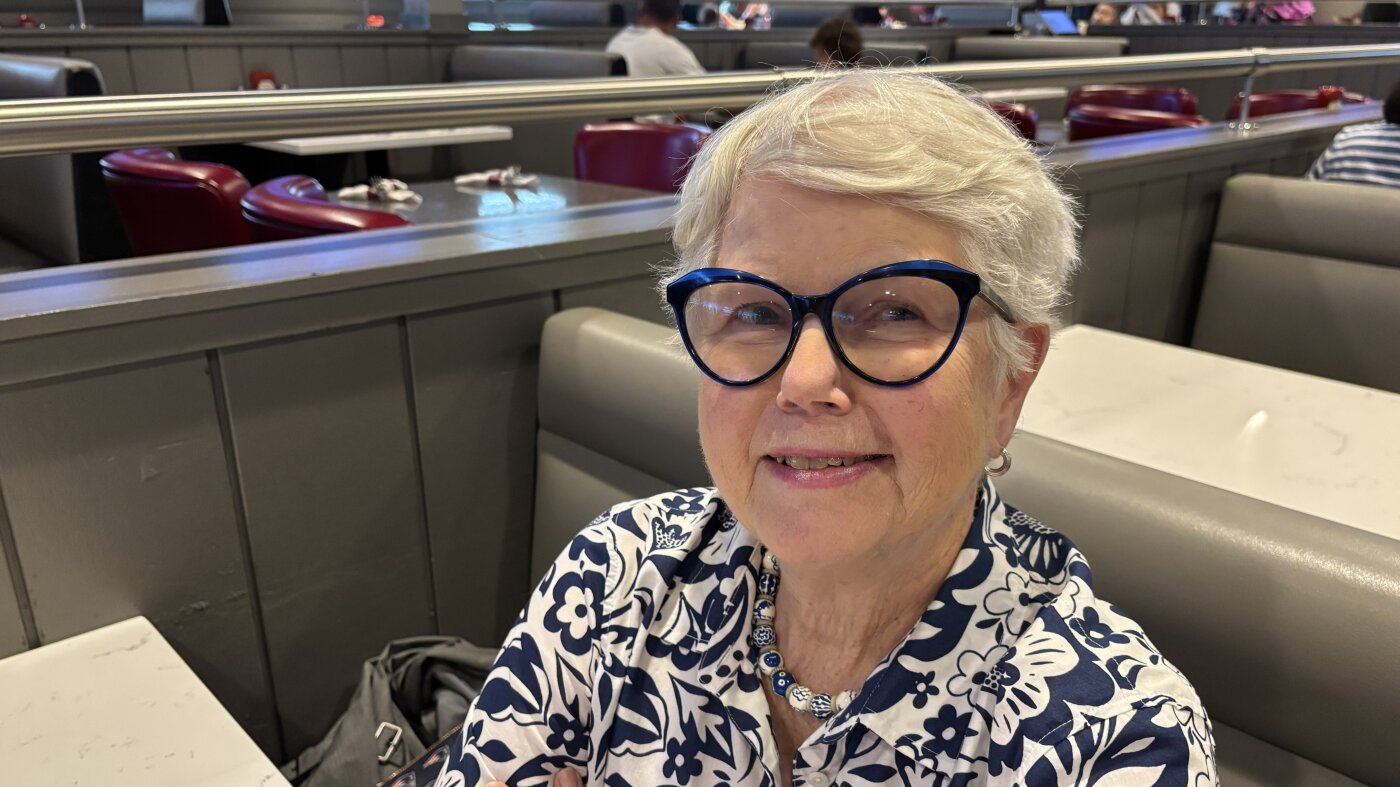
KATIA RIDDLE, BYLINE: A turning point for Netia McCray was her 30th birthday. She had COVID, and that day, she realized she wasn’t recovering nearly as fast as other people.
NETIA MCCRAY: On my birthday, it dawned on me when I woke up and couldn’t breathe for the fifth week in a row, this is a signal this is going to be with me for a little bit longer.
RIDDLE: That was six years ago. She’s still suffering now from long COVID – fatigue, heart palpitations, shortness of breath. She’s one of 14 people – doctors, patients, other experts and advocates – who agreed to work together on a committee to think about how best to treat long COVID. But before this federal advisory committee even got going, she got this letter from the Department of Health and Human Services, or HHS.
MCCRAY: (Reading) Thank you for your service as a member of the Advisory Committee on Long COVID, or ACLC. I am writing to inform you that your appointment to the ACLC is being terminated effective immediately.
RIDDLE: By some estimates, there are more than 18 million people in the U.S. with long COVID. These numbers run a few years behind. There could be even more people now battling the disease. Researchers say the condition now represents one of the nation’s most significant chronic health challenges, affecting the heart, lungs, brain and nervous system. Among other costs, this adds up to billions of dollars in lost earnings. McCray says as a patient, she sees firsthand how urgently more research is needed into this subject.
MCCRAY: I could have a great three months where I’m operating at 60, 70% of my baseline with my medications and treatment plan from my providers. And then all of a sudden, there can be a day that I overexert myself because of chronic fatigue, and I am out for a week.
RIDDLE: She says many providers that she’s seen just don’t understand long COVID. Alexandra Yonts was also on that advisory committee. She’s a pediatrician at George Washington University. She says she and other doctors are desperate for more tools to treat this disease.
ALEXANDRA YONTS: We need new therapeutics, and we don’t really have anything that is truly disease modifying in terms of regulating kind of the immune dysregulation that we see.
RIDDLE: Researchers don’t know exactly how many kids in the U.S. have had long COVID. Yonts says some estimates put it in the millions.
YONTS: Potentially 6 million kids, so, I mean, in context, that’s more than asthma.
RIDDLE: She’s one of the few pediatricians in the U.S. who specialize in this disease. Kids come from all over the country to see her. Even for experts like her, she says, there’s many patients for whom she just doesn’t have answers.
YONTS: It’s so horrible. It’s so frustrating.
RIDDLE: Some of her patients are relatively functional. Others have things like chronic fatigue, shortness of breath and nervous system disorders that are debilitating.
YONTS: I have one patient that can’t – he can’t even, like, talk to a friend on the phone for more than a minute.
RIDDLE: Representatives from HHS did not respond to a request for comment on this story. The federal government said in an executive order that the reason they terminated this and other committees was to minimize government waste. But experts say that this challenging healthcare issue is exactly the sort of thing these committees are designed to address. COVID is still a newcomer in the world of infectious disease.
MICHAEL ABRAMS: Because we don’t know a lot about it, you probably want to have a number of different experts involved, you know, musculoskeletal, neurologists, infectious disease people, occupational medicine.
RIDDLE: Michael Abrams wrote a report on these terminated committees. He works for an advocacy group called Public Citizen. He says the system of federal advisory committees has been working well for decades.
ABRAMS: Being really a way for us to harness the best and brightest volunteers at the highest level for some of the most important questions.
RIDDLE: Across federal agencies, more than 100 of these advisory committees have been terminated. The administration has not said if or when many of them, including the long COVID committee, will return. Katia Riddle, NPR News.
(SOUNDBITE OF BADBADNOTGOOD SONG, “SOUR SOUL”)
Copyright © 2026 NPR. All rights reserved. Visit our website terms of use and permissions pages at www.npr.org for further information.
Accuracy and availability of NPR transcripts may vary. Transcript text may be revised to correct errors or match updates to audio. Audio on npr.org may be edited after its original broadcast or publication. The authoritative record of NPR’s programming is the audio record.